Tie down a load on a truck or trailer
The right knots turn a sketchy load into a safe one. Anchor with a bowline or a round turn and two half hitches, then tension every line with a trucker's hitch so nothing shifts at highway speed.
Trucker's hitch
Gives roughly a 3:1 pull for tensioning a line, then locks off.
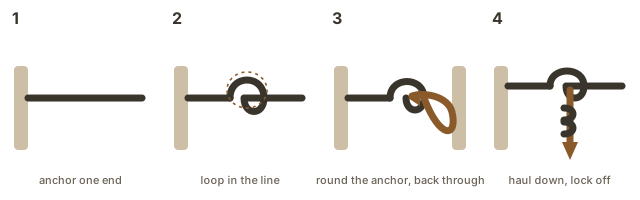
- Anchor one end. Tie the rope to a fixed anchor with a bowline or a round turn and two half hitches.
- Make a loop midline. Halfway down, twist a slippery (releasable) loop into the standing line to act as a pulley.
- Run the working end. Pass the free end around the far anchor and back up through the loop.
- Pull and lock. Haul down to tension the line, then lock it with two half hitches below the loop.
Bowline
A fixed loop that holds under load and unties easily after.
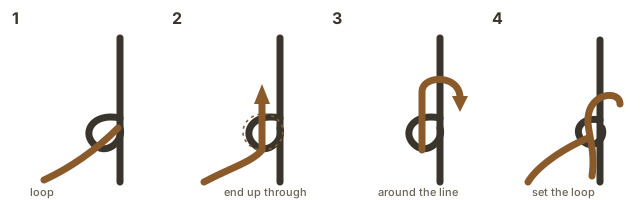
- Make a small loop. Form a small overhand loop in the standing line, leaving a long working end.
- Come up through it. Pass the working end up through the loop from underneath.
- Around and back. Take the end around behind the standing line and back down through the same loop.
- Tighten. Hold the loop size you want and pull the standing line to set it.
Round turn and two half hitches
A reliable anchor knot that can be tied and adjusted under tension.
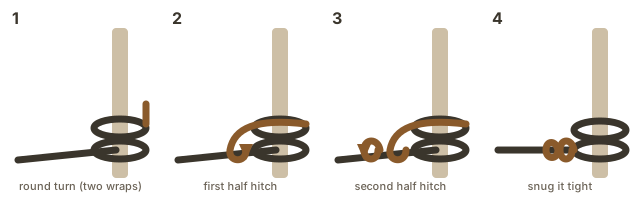
- Take a round turn. Wrap the rope fully around the post or rail twice; the friction takes the load while you finish.
- First half hitch. Bring the working end over and under the standing line and through the loop formed.
- Second half hitch. Repeat the same half hitch again in the same direction.
- Snug it. Slide both hitches against the round turn and pull tight.
Is rope enough, or do I need straps?
A planning guide from the half-the-weight securement rule, not a legal certification. For heavy or valuable loads, follow the cargo-securement rules below and use rated hardware.
Common mistakes
- Leaving slack: a load only needs to move an inch to start working a knot loose. Tension every line.
- Anchoring to a flimsy point: tie to a rated tie-down or the frame, not a plastic trim hook.
- Trusting one rope for a heavy load: rope is not load-rated. Over about 45 kg per line, use rated ratchet straps.
What to use
Use a low-stretch rope you can actually grip (around 8-10 mm). For anything heavy or valuable, rated ratchet straps are safer than any knot.
How this page was made
Knot steps follow standard practice and are drawn here as original diagrams. Cargo securement guidance follows FMCSA 49 CFR 393.100-393.136 (cargo securement). Written and checked by Alex Maxey; method on the methodology page. Last verified 2026-06-16. Knots are skills, not guarantees: practice on something that does not matter before something that does.
Knot questions
When should I use a trucker's hitch?
Gives roughly a 3:1 pull for tensioning a line, then locks off. Tie the rope to a fixed anchor with a bowline or a round turn and two half hitches.
When should I use a bowline?
A fixed loop that holds under load and unties easily after. Form a small overhand loop in the standing line, leaving a long working end.
When should I use a round turn and two half hitches?
A reliable anchor knot that can be tied and adjusted under tension. Wrap the rope fully around the post or rail twice; the friction takes the load while you finish.